Becoming A Chef

Updated: Jan 12
Becoming a chef is a calling. It may have arisen from a childhood dream, from a suggestion by a close relative or mentor, or as an accident.
However chefs began their culinary careers, there still exists the secret sauce that has kept their dish enticing, so to speak.
In our aim to honor and celebrate culinary greatness, as well as to share valuable information to our readers, we at Discovering Hospitality interviewed a handful of internationally acclaimed chefs since the past year, and by asking them about their culinary path, we were able to uncover the key elements that have inspired them into becoming the chefs that they are today.
From our query: What are your stepping stones to becoming an Executive Chef? Our featured chefs responded, as follows:
Chef Andrea Dipino Restaurant Consulting International (RCI) Founder & Principal Consultant and Former Executive Chef

“My path to achieving the role of an Executive Chef has been defined by notable milestones that have greatly influenced my professional journey. Commencing with culinary training at my hometown of Amalfi coast, I acquired fundamental skills and knowledge. I hold deep appreciation for my initial mentors, whose guidance played a pivotal role in inspiring the chef I ultimately became.
Additionally, I prioritized working in five-star establishments known for their commitment to excellence. This decision led me to gain valuable experience in a variety of cuisines and diverse settings across Europe, the Middle East, Africa and Central Asia, contributing significantly to the refinement of my culinary expertise.
Continuous professional development played a crucial role, involving certifications from E-Cornell, AHLEI, and becoming an IRCA certified Food Safety Auditor. Participation in workshops further underscored my commitment to excellence, enhancing both technical skills and professional dedication. Progressing through increasingly responsible roles in kitchen management has been pivotal in my development. Each leadership position served as a stepping stone, imparting managerial skills and operational insights essential for the role of an Executive Chef.”
Chef Philip Golding
Culinary Director for CCA Manila

“I've opened almost 38 restaurants in the last 28 years, like Azzuro with Billy King, Paper Moon, and I went through Fashion Cafe. I came in where that's a commercial kind of kitchen.
As a chef, you need to pick what you're good at. I love proteins, whether it be seafood or meat or game.
I'm now working on how we can bring in Butchery Courses, because the Philippines exports a lot of Manpower for butchering in slaughter houses. How do we professionalize that? Give them recognition certification? Do master classes in breaking down a carcass?
How can we show the essence of Philippine cuisine in tasting portions with Food hygiene? That is very important for me with curated products that have gone through traceability.
Working as an expat in three-star Michelin kitchens is very tough and if you don't speak the language, you're going to be very lonely there. You just go into a kitchen, working 18 hours a day to maintain Michelin stars and you get stuck on ice cream for three months, every day making ice cream. I worked with these guys but then I decided at 27 to come to Asia because I could see the tiredness of our kitchens.
I'm so fortunate that we at CCA, have a brilliant team that everyone does their job, that I step in when I need to and I go in where we need it.”
Chef Peter Montemayor, Executive Chef at True Home Bistro Boracay
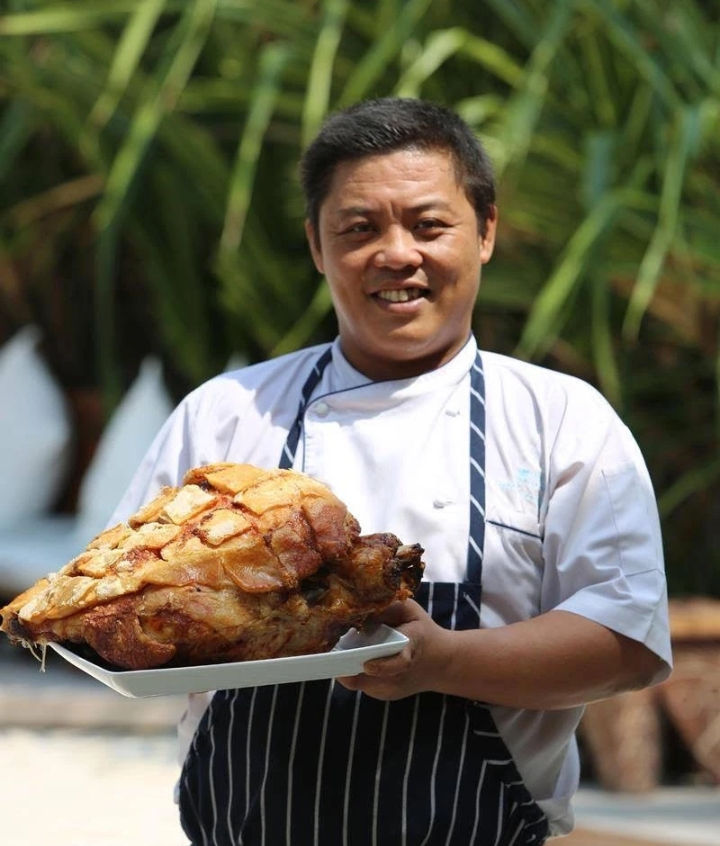
“I started as a commis in the cold kitchen of Shangri-La Mactan in Cebu, then went on to the different kitchens of the hotel, including the coffee shop’s ala carte and buffet line, the banquet kitchen, commissary kitchen. Afterward, I transferred to Shangri-La Makati in the banquet kitchen and later transferred to Friday’s Beach Resort in Boracay as Chef de Partie, and years later I became Head Chef of Lemon Cafe. Thereafter, I was the Villa Chef in Amanyara Luxury Beach Resort on the Turks & Caicos Island, and then moved to Koh Samui in Thailand to be Chef de Cuisine of a fine dining restaurant, and later as an Executive Sous Chef at Nikki Beach Resort where I also got promoted to being Executive Chef.
What I love about being an Executive Chef is when people say the food is good, meaning that it is you, who has created the menu that you see people are enjoying. That makes me happy.”
Chef Tristan Bayani, Co-Owner and Executive Chef at Ladera Culinary Services and RibChon Restaurant

“I did not think that I would become a chef. Actually, it was an accident. When I was in college, my sister had a manufacturing business. I was the one who purchased the fabrics, did the patterns, cut the fabrics, conducted the samples in department stores. I did everything.
And then, one time my sister asked me, ‘Can you go to Heny Sison Culinary School?’ Before, there's not many culinary schools like Heny SIson. CCA only and Gene Gonzales School. So she said to me, 'Take the course in Culinary with Heny Sison for me, because I'm busy, but I want to know the recipes, and then share it with me.’ I said, ‘no, it's not for boys, actually for girls. It's not my thing.’
I did not take the first batch in that school. After that, another batch came. My sister told me again, ‘Hey, you better take this course because I want to have the recipes.’ So I studied culinary.
And then one day, my chef told me, ‘Hey, kid! You have talent.’ Every time he made dishes in class, he would let me taste it first. My chef said, I have a gift of taste. He said, ‘You can learn how to cook, but the gift of taste, that’'s a gift.’ So from there, I thought, ‘wow, I can just take this as a career!’
After culinary school, another chef was opening a restaurant and they recommended me. I did not go through the lower roles anymore because when I was working while studying, I did everything from dishwasher, driveway delivery, bartending. So, when I was tasked to be a Sous Chef without starting as a kitchen helper, I just said to myself, I can learn from this along the way. So there, started my journey in culinary.
I went to the States to work, and then I was given a scholarship in Korea to study Asian Cuisine. After that, I came here to the Philippines and worked as the Executive Chef of Splendido Golf and Country Club in 2016, and then I opened RibChon in 2017.”
Chef Norbert Gandler
ISCAHM Co-founder and Executive Director for Culinary Education
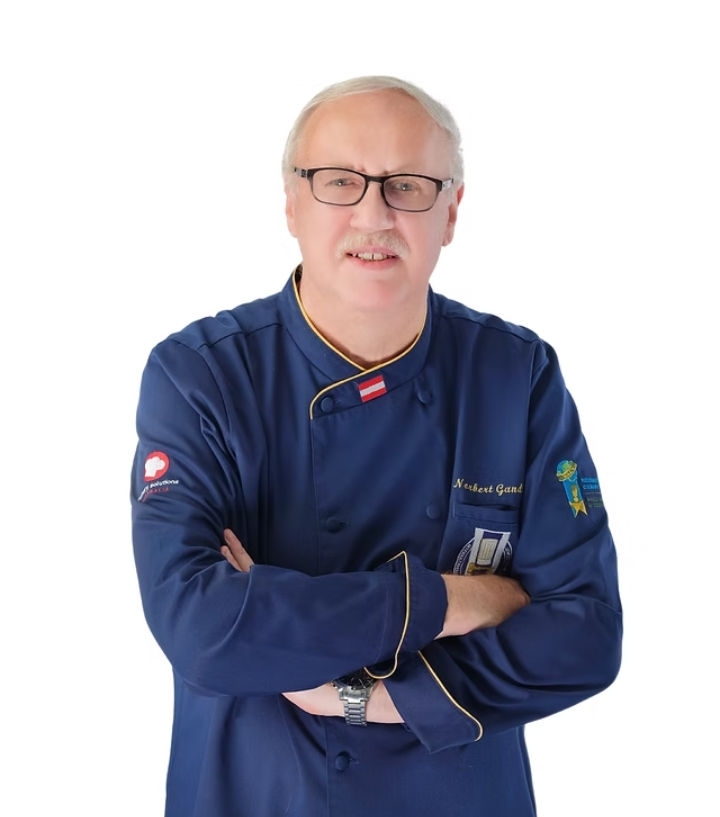
“I worked in 9 countries all around the world since 1977, including as a Chef de Partie in a Michelin Star restaurant, opening F&B outlets in five-star hotels, being Captain and Team Leader of the Philippine National Team in the Salon Culinaire, Singapore for 10 years where I earned several Silver Medals. I also was the Team Leader for Mandarin Oriental Manila, Chefs on Parade Overall Champion for nine years, and eventually discovered my life’s purpose as a teacher of Culinary Arts, establishing one of the first culinary schools in the Philippines in 2003.
When I started, it was pretty heavy. As a chef, you work so many hours and do so much overtime, but that has changed. Maybe what is difficult sometimes is working on weekends and holidays, but you get used to it and even like it. Obviously, when you work in this job, there's not much time left for doing other things, but I think our work is always interesting.”
Chef Gilles Galli
Executive Chef at Vinpearl Resort Nha Trang, Vietnam. Member of: Disciples d'Auguste Escoffier
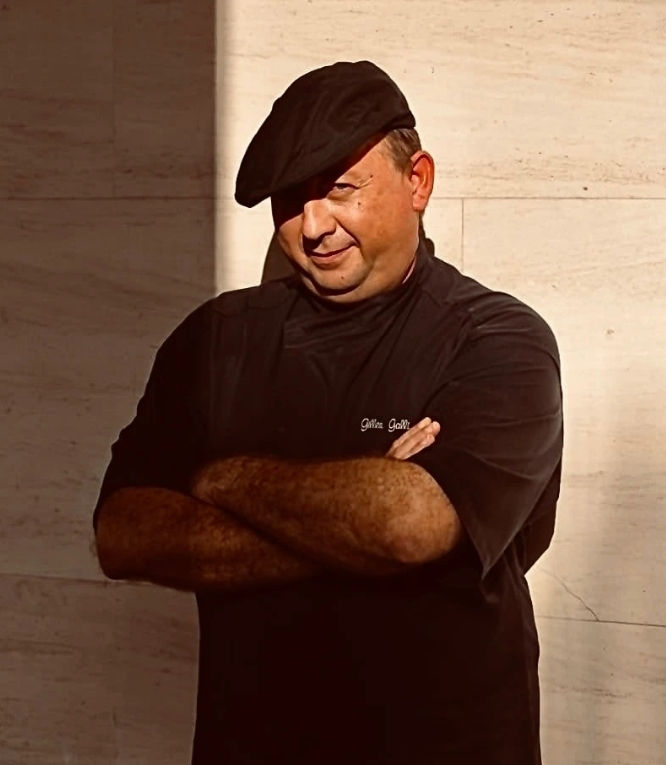
“I owned my own restaurant in France for 10 years, in Saint-Paul de Vence, near Nice. It was a wonderful experience, though not always easy. Today, I feel more fulfilled working in the hotel industry, where the focus goes beyond just the kitchen. I particularly enjoy the logistical and organizational aspects of the role, which I find much more stimulating and rewarding.”
Chef Bryant Santarin
Chef de Partie at Yakumi, Solaire Resort & Casino

In the words of Vic Alcuaz, prominent Hospitality Headhunter, Trainer & Consultant, and author of Hospitality Superstars 1 & 2,
“Bryant started his hotel career as a Steward at EDSA Shangri-la Hotel. He slowly moved up the hotel ladder to Kitchen Helper, 3rd Commis, 2nd Commis, 1st Commis, Demi Chef de Partie, and Chef de Partie. Shangri-la’s Japanese Restaurant has been one of the favorite go-to restaurants of Japanese-eating enthusiasts and elite from the time it first opened its doors in 1992 until the present.
Bryant was very lucky to have been mentored by both Filipino and Japanese chefs throughout his 30-year tenure with Shangri-La. He learned all his cold and hot kitchen skills here. But it was his sheer determination from his first year at the hotel to move up that ladder and to focus on Japanese cuisine that placed him where he is now. Looking back, Bryant says he surely made the right decision from the start. He is not only immensely enjoying his work but is also very proud about being able to provide many comforts and conveniences for his family, not finding a need to work overseas, despite the very many opportunities.”
Chef Thomas Wenger Managing Director and Senior Culinary Consultant of Enderun Hotels.
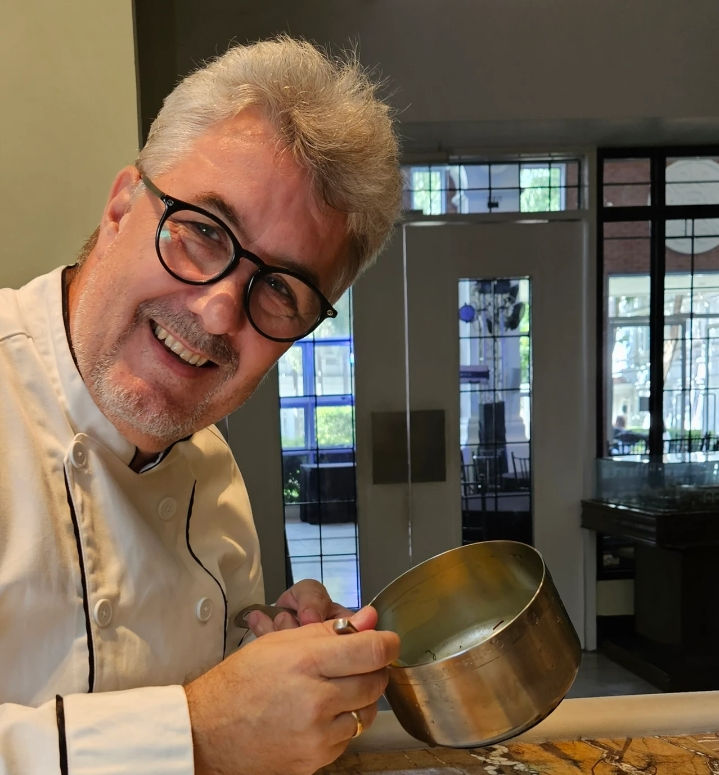
“In a nutshell, I graduated with a diploma as a chef in Switzerland some 40 years ago. I traveled the world to learn and gain experience, ultimately achieving my goal of becoming an Executive Chef at a leading property in 1995 at the Hong Kong Jockey Club.
In 2003 I came back to the Philippines, having been here previously in 1995/96, to work with the Mandarin Oriental. Then in 2008, I joined Enderun, a very new, young, energetic, and forward-thinking company. Initially, I was involved in setting up all the culinary programs. After a few years, the auxiliary business of the in-house restaurant and banquet operation was given to my care. In 2011, I started to be involved in Enderun Hotels, mostly consulting for them on F&B operations. Since 2017, I now lead the team at Enderun Hotels as well as the team of our F&B group.”
Hans V. Turnovszky
Former Executive Chef and Retired Hotelier
“These were not easy years, working split shifts from 9:00 a.m. – 3:00 p.m. and from 6:00 p.m. – 9:00 p.m. six days per week was quite exhausting, especially in this old hot kitchen. Overtime was never discussed. The “Sacher” being located just opposite the Vienna State Opera where many performances ended at around 10:00 p.m., so of course, if there came a rush of late diners, we could not just go home on time! But we learned discipline, to cope with stress, to work focused and concentrated and learned multi-tasking, and also endurance. All of these attributes would come in handy later on in my career, but at that time I did not see it yet. In retrospect, no, it was not easy but unavoidable to succeed later on in my career. There are no short-cuts to success.”
Indeed, there are no short-cuts to success. But as our featured chefs - Chef Andrea Dipino, Chef Philip Golding, Chef Peter Montemayor, Chef Tristan Bayani, Chef Norbert Gandler, Chef Gilles Galli, Chef Bryant Santarin, Chef Thomas Wenger and Hans V. Turnovszky, have shared, success is earned by sheer determination to learn the fundamentals, techniques and strategies in culinary, the endurance to overcome challenges and to cultivate discipline, focus and an efficient work ethic, by having the passion to cook for others, and by finding joy in the complexities that comes with being a chef.
As AlainDucasse, the most Michelin-starred living chef has said
“The real evolution is to learn something new every day - it’s very important for chefs to share what they have discovered.”
Thus, it is through our featured chefs’ generous acts of sharing that have earned them the respect and honor from their colleagues and clients, and of course the success that they had ultimately sought.