FEATURES: Brunei Sets Stage for Record Tourism with Visit Brunei Year 2027 Campaign
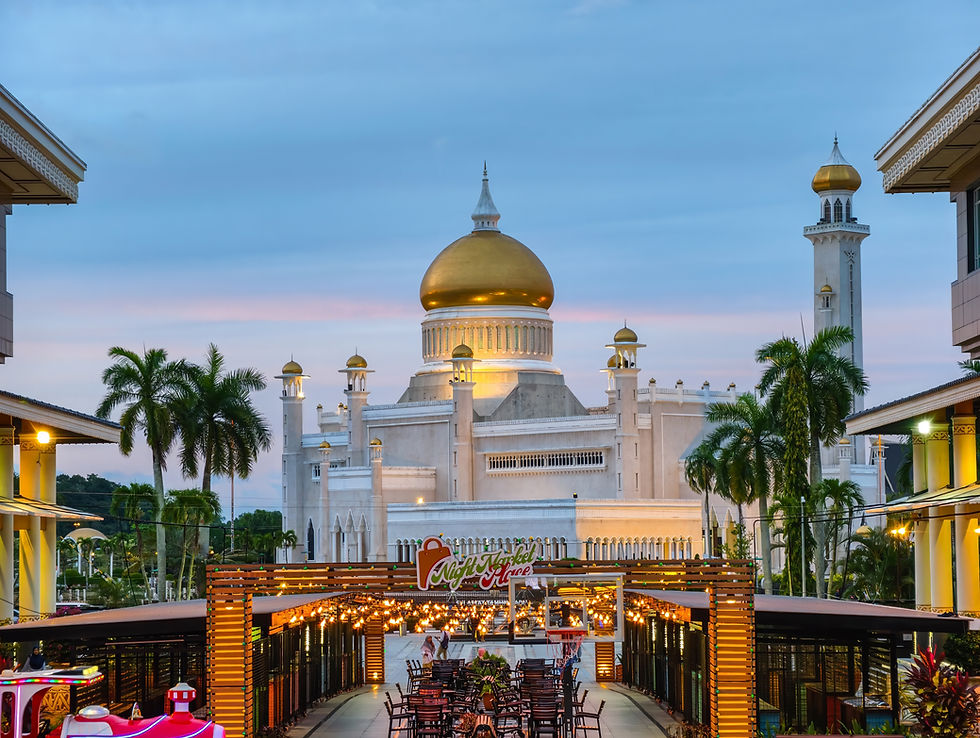
A landmark royal anniversary is giving one of Southeast Asia's quietest nations its loudest invitation in decades.
For a country that has spent decades content to stay off the well-worn Southeast Asian trail, Brunei Darussalam is about to have a very different kind of year. The oil-rich sultanate on the island of Borneo, long overshadowed on itineraries by neighbours Malaysia and Indonesia, has declared 2027 as Visit Brunei Year, a nationwide campaign designed to introduce the country to travellers who may know remarkably little about it beyond its skyline of golden domes.
The timing is no accident. Visit Brunei Year 2027 will unfold alongside the Diamond Jubilee of His Majesty Sultan Haji Hassanal Bolkiah Mu'izzaddin Waddaulah, marking sixty years since he ascended the throne. It is a rare convergence of a royal milestone and a tourism strategy, and Brunei Tourism is betting that the celebrations surrounding the Jubilee will do what marketing budgets alone rarely can: give the country a genuine, unrepeatable moment on the regional stage.
The campaign was formally launched on 20 June at a pre-launch ceremony held at Jerudong Park Garden, presided over by His Royal Highness Prince 'Abdul Mateen, Brunei's minister of foreign affairs, alongside Yang Amat Mulia Pengiran Anak Isteri Anisha Rosnah. Its chosen theme, "The Abode of Peace," is drawn directly from the literal meaning of the country's name and leans into the image Brunei has cultivated for itself internationally: unhurried, devout, and safe. The branding also draws on the nation's Malay Islamic Monarchy philosophy, the guiding framework that shapes governance, education and public life across the sultanate, giving the campaign a cultural depth that goes beyond a marketing slogan. Two mascots, Awang and Dayang, dressed in traditional Malay attire, were unveiled at the same event and will front the campaign across domestic and international platforms in the lead-up to 2027.
Dato Seri Setia Dr. Awang Haji Abdul Manaf bin Haji Metussin, Brunei's coordinating minister for economic policies and minister of economy and trade, framed the initiative as something broader than a tourism push. Speaking at the launch, he described Visit Brunei Year as a whole-of-nation effort, one intended to pull government agencies, private tourism operators and local communities into a single coordinated push to diversify an economy that has long depended on oil and gas revenue. The subtext was clear: Brunei wants visitors, but it wants the sector itself to grow into something that can outlast a single anniversary year.
That ambition was on full display shortly after the domestic launch, when Brunei made its international debut as the Official Destination Partner at Travel Meet Asia 2026, held in Jakarta on 23 and 24 June. It was a notable choice of stage. Indonesia has become an increasingly important partner for Brunei's tourism ambitions, and the two countries have been exploring joint eco-tourism promotion as part of a wider push to market Borneo's rainforest interior to international travellers who might otherwise fly straight past it.
Ask anyone in Brunei's small but determined travel trade what the campaign needs to achieve, and the answer tends to circle back to one number: nights. Hajah Nur Atiqah of Darussalam Travel put it plainly, noting that one of the biggest opportunities of Visit Brunei Year 2027 lies in stretching visitor stays beyond the typical three-day, two-night pattern that has defined the destination for years. The plan, she said, is to package the country's scattered experiences into multi-day itineraries that pull travellers further from the capital, Bandar Seri Begawan, and deeper into the country's four districts.
It is a fair diagnosis of Brunei's central tourism problem. Most visitors currently treat the sultanate as a brief stopover rather than a destination in its own right, a habit the industry is eager to break. A representative from Pan Travel Service echoed the sentiment, pointing out that many travellers simply do not realise how much variety exists across Brunei's four districts, including dive sites that remain little known outside a small circle of enthusiasts. For an agent trying to build a compelling package, that lack of awareness is as much an opportunity as it is an obstacle.

The country's natural assets give the strategy some genuine substance to work with. Ulu Temburong National Park, accessible largely by longboat through the Temburong district, protects one of the most intact stretches of primary rainforest left in Borneo, and its canopy walkway remains one of the region's more thrilling ways to look out over an unbroken forest horizon. Back in the capital, the centuries-old stilt settlement of Kampong Ayer, often described as the largest water village in the world, offers a rare glimpse of a community that has occupied the Brunei River for hundreds of years, its wooden walkways and houses now sitting in the shadow of the capital's modern skyline. Between the two lies an emerging pitch that campaign planners are keen to develop further: Brunei's dark, largely light-pollution-free skies, which astrotourism advocates in the country have begun promoting as a genuine drawcard for stargazers, an angle that surfaced prominently at the Jerudong Park pre-launch event itself.
The tourism calendar for the Jubilee year is still being finalised, but organisers have confirmed that the celebrations marking sixty years of the Sultan's reign will sit at the centre of the programme, alongside a series of themed festivals planned to run through the year and showcase different facets of Brunei's culture and landscape. Officials have been careful to describe the calendar as a living document, one that will keep expanding with new events as details are confirmed closer to 2027.
Whether Visit Brunei Year 2027 succeeds in reshaping perceptions of the sultanate will depend on execution as much as ambition. Small destinations that lean too heavily on a single anniversary can struggle to sustain momentum once the anniversary passes. But Brunei's pitch is a distinctive one in a region increasingly crowded with identical beach-and-temple itineraries: a devoutly Islamic monarchy, virtually untouched rainforest, a floating village older than most modern states, and a royal celebration that will not come around again for generations. For a country that has spent so long being overlooked, 2027 is shaping up to be the year it finally asks to be noticed.


